
When Hackers Target Your Windows Login: Why LSA Certification Is a Game-Changer for Enterprise Security?
1/14/2026, 10:04:16 AM
Windows Maximum-Level Login Security: SecVSC’s Built-in SecrueLogon Component – Microsoft LSA-Certified for Enterprise-Grade Protection
When Hackers Target Your Windows Login: Why LSA Certification Is a Game-Changer for Enterprise Security?
"Vulnerabilities fixed last week, breached again this week via credential theft" — this is the recurring nightmare for IT teams across enterprises. Statistics show 83% of targeted attacks zero in on stealing Windows system credentials, and the login authentication workflow is hackers’ favorite weak link to exploit.
Let’s start with a quick breakdown: LSA (Local Security Authority) is the core security backbone of Windows, running with top-tier SYSTEM privileges. It manages user login verification, stores critical credentials (passwords, Kerberos tickets, etc.), and enforces security policies — truly the "central nervous system" behind Windows login protection. Windows 8.1 and later versions come with LSA Protection (RunAsPPL) enabled by default, which automatically blocks uncertified components from loading. In short: even the most feature-packed security tools can’t access Windows’ core security layer without Microsoft LSA certification.
Meet SecVSC: a PKI-based rapid and secure login authentication tool for Windows, whose core security component SecureLogon is Microsoft LSA-signed and certified. The biggest win? Since its launch, SecVSC has embedded the SecureLogon security component as a core essential module — not an optional add-on, but a default login reinforcement feature for every SecVSC user. Today, this cornerstone of SecVSC’s security suite has officially earned Microsoft LSA certification, meaning every enterprise and user using SecVSC gets Windows login protection backed by Microsoft’s seal of approval.
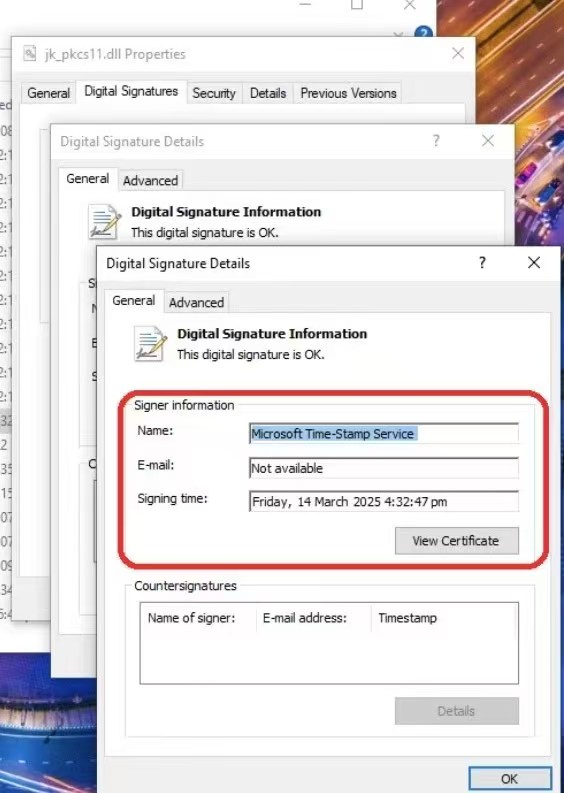 SecVSC embedded the SecureLogon security component has obtained Microsoft LSA signature certification
Microsoft LSA Certification: A Security Credential Tougher Than a Bank Vault Key.
LSA certification is widely regarded as the "Security Oscars" of the software world — far from a routine stamp of approval. To earn it, components must clear two rigorous hurdles:
1. Dual Signature + Hardware Validation: Components require Microsoft’s digital signature, with driver-based tools needing extra WHQL (Windows Hardware Quality Labs) certification. Any tampered or unsigned code gets blocked outright;
2. End-to-End SDL Validation: Compliance with Microsoft’s Security Development Lifecycle (SDL) across 7 stages — from concept to retirement — with code vetted via automated scans and manual audits.
One security vendor admitted their component was rejected by Microsoft three times for failing SDL vulnerability closure tests. In contrast, as SecVSC’s built-in core module, the SecureLogon component stands out as one of the few certified solutions — a testament that SecVSC’s login security is built on Microsoft’s gold standard for trust.
Built-in Component + LSA Certification: 3 Ways SecureLogon Secures Your Logins
1. An Impenetrable Shield for Credentials
The SecureLogon component’s sole mission is to harden Windows login authentication. As SecVSC’s default module, it syncs seamlessly with LSA Protection to block credential-theft tools like Minikatz from targeting the LSASS process — stopping password and ticket theft in its tracks. A technology enterprise’s real-world testing confirmed: After deploying SecVSC, Windows login attack interception hit 100% instantly.
2. Global Compliance + Zero Compatibility Headaches
International frameworks like ISO 27001 and NIST Cybersecurity Framework (NIST CSF) mandate "trusted reinforcement for login workflows," while Windows 11 enforces LSA Protection by default. SecVSC’s built-in SecureLogon component checks both boxes — no extra plugins, no manual configs. It meets global compliance requirements without triggering system blocks, making it a perfect fit for multi-region IT architectures.
3. Microsoft’s Endorsement = Instant Trust
LSA certification is Microsoft’s official "seal of security" for the SecureLogon component. As SecVSC’s core module, this means SecVSC’s login security has passed rigorous global standards — a major plus for cross-border partnerships and international bids. A procurement director at an energy firm put it simply: "Seeing SecVSC’s built-in login component has LSA certification boosted our trust threefold — we chose it without hesitation."
Real-World Win: How SecVSC (with Built-in SecureLogon) Stopped a Credential Theft Attack
IT Director at a global group: "After enabling LSA Protection, three security tools were blocked for lacking certification — leaving our logins exposed. Once we deployed SecVSC, we realized SecureLogon is a built-in core module. It loaded flawlessly, monitored login activity in real time, and last week blocked a penetration attempt that tried to steal credentials via forged drivers."
Act Now: Lock Down Logins with Microsoft-Certified Security
While hackers scramble to bypass LSA Protection, your enterprise and user can get instant access to the Microsoft LSA-certified SecureLogon component — built right into SecVSC. No extra costs, no complex setups — just out-of-the-box login security that meets global standards.
Contact an SecVSC product consultant today to learn how to deploy LSA-certified reinforcement for Windows logins, and work with our team to identify and address security risks in your system’s login workflow!
(P.S. Verify LSA Protection in 3 seconds: Open Task Manager and check if lsass.exe is labeled "Protected Process." After deploying SecVSC, view SecureLogon’s LSA certification status directly in the product console.)